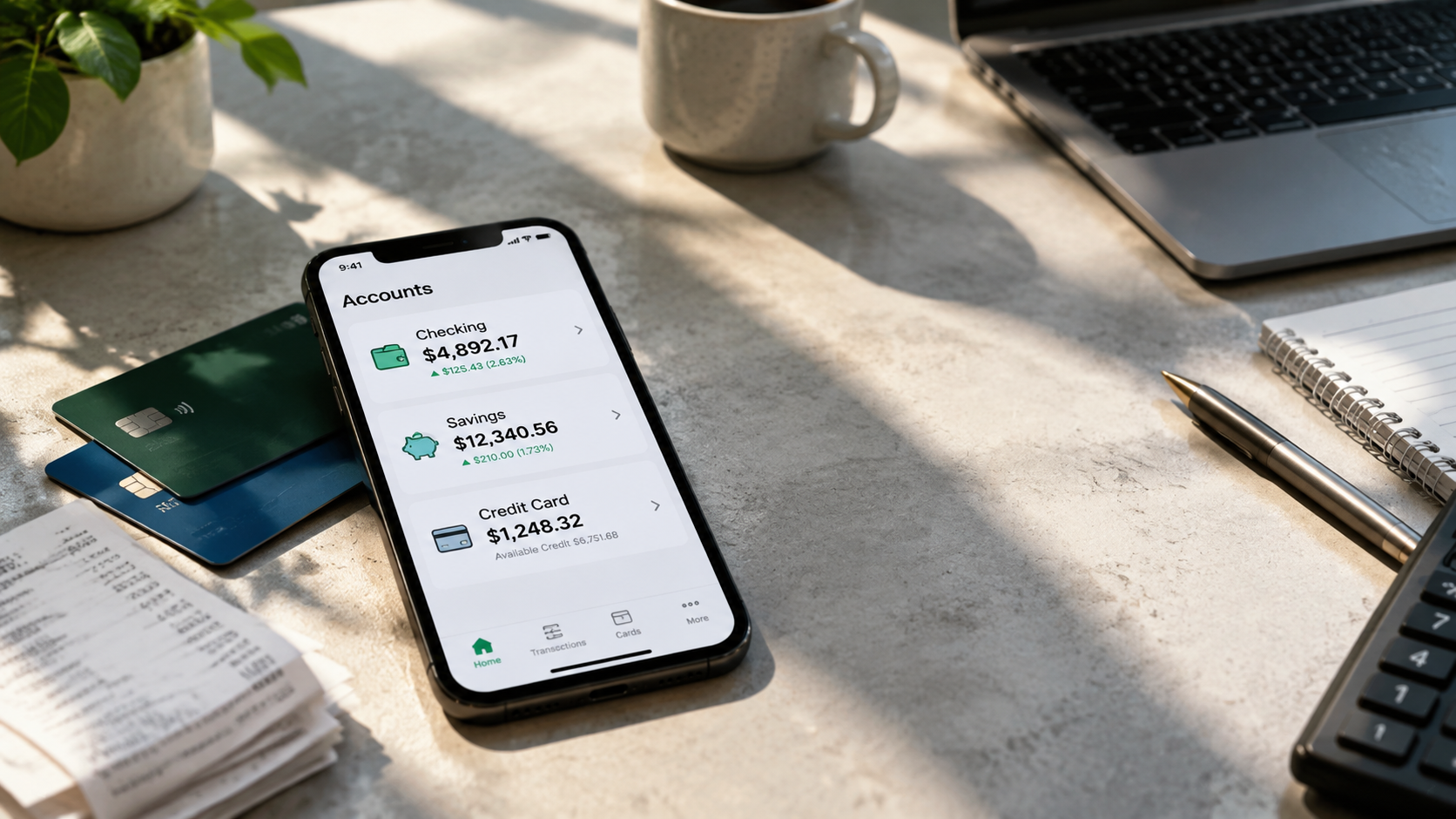
Checking accounts are designed for everyday money management, including receiving income, paying bills, withdrawing cash, and making debit-card purchases. However, the account advertised as “free” may still have charges for certain services or for failing to meet stated requirements. The answer to how much do banks charge for checking accounts depends on the institution, account type, balance, transaction habits, location, and whether you qualify for fee waivers.
A useful comparison does not focus only on the monthly maintenance fee. It also reviews overdraft policies, ATM access, minimum balance rules, incoming and outgoing transfer fees, paper statements, foreign transactions, and other costs that may affect your actual spending. This guide explains common checking account fees, how to compare them, and how to reduce avoidable charges without assuming that one account is best for every customer.
What Is a Checking Account Fee?
A checking account fee is a charge connected with maintaining or using a transaction account. Some fees are recurring, such as a monthly maintenance charge. Others apply only when you use a particular service or when an account event occurs, such as an overdraft or use of an out-of-network ATM.
Some checking accounts have no monthly maintenance fee, but “no monthly fee” does not necessarily mean “no possible fees.” A bank may still charge for overdraft services, wire transfers, stop-payment requests, cashier’s checks, foreign transactions, or certain ATM withdrawals. The fee schedule and account agreement are more reliable than a marketing label.
How Much Do Banks Typically Charge?

There is no single industry-wide checking account price. Common pricing patterns include:
- Monthly maintenance fees: Some traditional checking accounts charge a recurring fee, while others waive it when you meet conditions such as maintaining a qualifying balance, receiving regular direct deposits, or linking eligible accounts.
- Online checking accounts: Many online banks offer accounts without a monthly maintenance charge, although eligibility, ATM policies, and service availability differ.
- Basic or second-chance accounts: These may have different fee structures, transaction limits, or eligibility requirements. They can be useful for people rebuilding banking access, but the account agreement should be reviewed carefully.
- Premium accounts: Some accounts charge a higher recurring fee in exchange for added services, relationship benefits, or special support. The value depends on whether you actually use those features.
- Credit union accounts: Credit unions may have different pricing and membership requirements. A credit union is a member-owned financial cooperative, not simply a bank with a different name.
Because fee amounts and waiver requirements change, a comparison should use the current fee schedule for each account. Do not rely on an old article, a search result snippet, or a general statement that an account is “free.”
Common Checking Account Fees to Compare
Monthly maintenance fee
This is the most visible recurring charge. Ask whether it is charged every statement cycle and exactly how it can be waived. Requirements may include direct deposit, a minimum daily balance, a minimum combined balance across linked accounts, or qualifying debit-card activity.
A waiver is not always free in practice. For example, maintaining a required balance may mean keeping money in a low-interest account instead of a high-yield savings account. Compare the cost of the fee with the potential opportunity cost of meeting the waiver condition.
Overdraft and insufficient-funds charges
An overdraft can occur when a transaction exceeds the available balance and the bank pays it, subject to the account’s policies. An insufficient-funds event can occur when a transaction is rejected or returned because the account lacks enough available money. Policies vary widely, and some institutions do not charge for certain declined transactions while others may charge for paid or returned items.
Ask whether the bank offers low-balance alerts, linked savings transfers, a line of credit, or an overdraft grace period. These services may have their own terms or costs. Opting into debit-card overdraft coverage can affect whether certain everyday card transactions are approved when funds are insufficient, so read the disclosure before making a choice.
ATM fees
Your bank may charge for using another institution’s ATM, and the ATM owner may impose a separate surcharge. Some banks reimburse certain out-of-network ATM fees, subject to limits or conditions. Others provide access to a broad network but offer little or no reimbursement outside it.
ATM access is especially important if you regularly use cash, travel, live in an area with few network machines, or bank primarily through an online institution. Compare the network locator, reimbursement rules, withdrawal limits, and international ATM policies.
Transfer, wire, and payment fees
Electronic transfers between your own accounts may be free, but some banks charge for expedited transfers, outgoing wires, incoming wires, or international transactions. Bill-pay services can also have separate rules for expedited payments or payments sent by paper check.
If you frequently move money between banks, examine transfer timing as well as price. A free transfer that takes several business days may be less useful than a paid service when timing is important. Never assume that a transfer is complete merely because it appears as pending.
Paper statement and account service fees
Some institutions charge for paper statements, cashier’s checks, money orders, stop-payment requests, research requests, or account closure within a stated period. These fees are often infrequent, but they matter when comparing accounts for specific needs.
Foreign transaction and currency-conversion fees
Debit-card purchases made abroad or processed by a foreign merchant may involve a foreign transaction fee or a currency-conversion cost. The bank, card network, ATM operator, or merchant may each play a role. Travelers should check the bank’s international fee disclosure and use caution when an ATM or merchant offers to convert the transaction into the customer’s home currency.
How to Compare Checking Accounts Step by Step
1. List your normal account activity
Write down how you use banking services in a typical month. Include direct deposits, cash withdrawals, debit-card purchases, bill payments, transfers, checks, travel, and the lowest balance you usually maintain. Also consider whether you need branches, weekend support, cash deposits, or access to a safe-deposit service.
2. Identify the fees most likely to affect you
A person who rarely uses cash may care more about transfer limits and overdraft controls than ATM reimbursement. Someone who receives paper checks or deposits cash may prioritize branch availability. A frequent traveler may focus on international card and ATM charges.
3. Read the official disclosures
Use the account’s current fee schedule, deposit agreement, privacy notice, and consumer disclosures. The Consumer Financial Protection Bureau, or CFPB, explains many deposit-account concepts and consumer protections. The Federal Deposit Insurance Corporation, or FDIC, provides information about deposit insurance and bank accounts. These sources can help you understand terminology, but the bank’s own agreement determines the account-specific price and conditions.
4. Calculate the likely annual cost
Estimate the recurring fee for a full year, then add the services you are likely to use. Subtract a waiver only if you can reliably satisfy its requirements. For example, an account with a maintenance fee may cost less than an apparently free account if the latter regularly charges for out-of-network cash withdrawals or transfers that you use often.
Use a simple worksheet with columns for monthly fees, ATM costs, overdraft-related costs, transfer fees, foreign transaction fees, and other likely services. Compare both a normal month and an unexpected month in which your balance is lower or you need a special service.
5. Check access, technology, and protections
Price is only one part of a checking account comparison. Review mobile deposit limits, check-writing availability, customer service hours, branch access, security alerts, account lock features, and how quickly you can report unauthorized transactions. Confirm whether the institution is FDIC-insured or, for an eligible credit union, federally insured through the National Credit Union Administration. Deposit insurance coverage has rules and limits, so review the insurer’s official guidance for your situation.
6. Recheck the terms periodically
Banks can change fees and requirements with notice under applicable rules. Review statements and notices, especially after a merger, account conversion, change in employment direct deposit, or move to a new location. An account that was economical when you opened it may no longer fit your habits.
Ways to Reduce Checking Account Fees
- Set a low-balance alert and an alert for large or unusual transactions.
- Keep a small cash buffer if doing so does not interfere with essential bills or higher-priority savings goals.
- Use the bank’s ATM network and verify the location before withdrawing cash.
- Ask whether direct deposit or a linked account waives the monthly charge.
- Turn on account notifications for pending and posted transactions.
- Review automatic payments and cancel subscriptions you no longer use.
- Use electronic statements if they are secure and convenient for you.
- Ask customer service about fee reversals when an unusual event occurs, but do not treat a courtesy reversal as a guaranteed policy.
- Maintain a separate emergency reserve or savings account when possible so a single timing error is less likely to disrupt bill payments.
Pros and Cons of Different Checking Account Types
Traditional branch checking
Pros: Branch access, cash services, in-person support, and a familiar range of banking products may be useful. Customers who deposit cash or need cashier’s checks may value local access.
Cons: The account may have a monthly charge or waiver requirements. Branch hours, ATM availability, and service quality vary by location, and some accounts may pay little or no interest.
Online checking
Pros: Online institutions may offer low recurring costs, strong digital tools, and broad ATM partnerships. Lower operating costs can sometimes support simpler fee structures.
Cons: Cash deposits, urgent in-person assistance, and certain specialized services may be less convenient. ATM reimbursement and transfer limits require careful review.
Interest-bearing checking
Pros: The account may earn interest on eligible balances while retaining checking functionality.
Cons: The advertised rate may require direct deposit, a minimum balance, a transaction threshold, or other conditions. Compare the actual yield with a high-yield savings account and consider whether withdrawals, access, and insurance arrangements meet your needs.
How Checking Accounts Fit Into a Broader Personal Finance Plan
A checking account is usually the operating hub of a household budget, not the entire financial plan. A budgeting calculator or spending tool can help you forecast bills, track irregular expenses, and identify the minimum balance you need each month. A linked savings account may be appropriate for emergency reserves, while a credit card can provide convenience or rewards if you pay the balance as agreed and understand its interest rate and fees.
Checking fees should also be separated from borrowing costs. Personal loans and debt consolidation involve interest, origination fees, repayment periods, and credit consequences. Mortgage rate comparison requires attention to the annual percentage rate, points, closing costs, loan type, and qualification assumptions. Car insurance and home insurance comparisons should consider coverage, deductibles, exclusions, and claims service rather than premium alone.
Longer-term decisions include retirement accounts and IRAs, where taxes, investment risk, contribution rules, and withdrawal restrictions matter. Improving a credit score generally involves consistent on-time payments, managing balances responsibly, reviewing credit reports, and disputing inaccurate information. A checking account can support these goals by making income and bill timing easier to manage, but it does not replace an emergency fund, appropriate insurance, or a diversified long-term plan.
Limitations of Checking Account Comparisons
Published comparisons can become outdated when banks revise fee schedules, change ATM networks, or alter waiver requirements. A fee may also depend on state law, account history, customer status, transaction type, or how a bank calculates the available balance. Advertised rates and benefits may be available only to eligible customers and may change over time.
Comparison tables can simplify complex terms and may not capture service quality, fraud response, accessibility, or the convenience of a local branch. Before opening an account, confirm the current terms directly with the institution and save a copy of the disclosures. If a fee or transaction is unclear, ask the bank to explain how it was calculated.
Concise Q&A
Is a free checking account really free?
It may have no monthly maintenance fee, but other charges can still apply. Check the full fee schedule, including ATM, overdraft, wire, transfer, foreign transaction, and special-service fees.
What is the most important checking account fee?
For many customers, the monthly maintenance fee is the easiest cost to notice, but the most important fee is the one you are most likely to incur. Cash users may focus on ATM costs, while people with variable income may prioritize overdraft policies and alerts.
Can a bank change checking account fees?
Generally, banks can revise account terms subject to applicable laws and required notices. Read statements, email notices, and updated disclosures so you can compare alternatives if the account changes.
Should I choose the account with the lowest fees?
Not automatically. Consider access, security tools, customer support, cash services, transfer speed, deposit insurance, and whether the fee waivers are realistic for your circumstances.
Bottom Line
When asking how much banks charge for checking accounts, look beyond the advertised monthly price. Compare the complete fee schedule, model your actual usage, verify waiver conditions, and consider access and consumer protections. The most suitable account is usually the one whose total cost, features, and service model match your regular habits—not necessarily the account with the lowest headline fee.
Informational disclaimer: This article is for general educational purposes and is not personal financial, tax, legal, or investment advice. Banking fees, insurance rules, and account terms can change. Review current disclosures and consider consulting a qualified professional before making a financial decision.
Leave a Reply