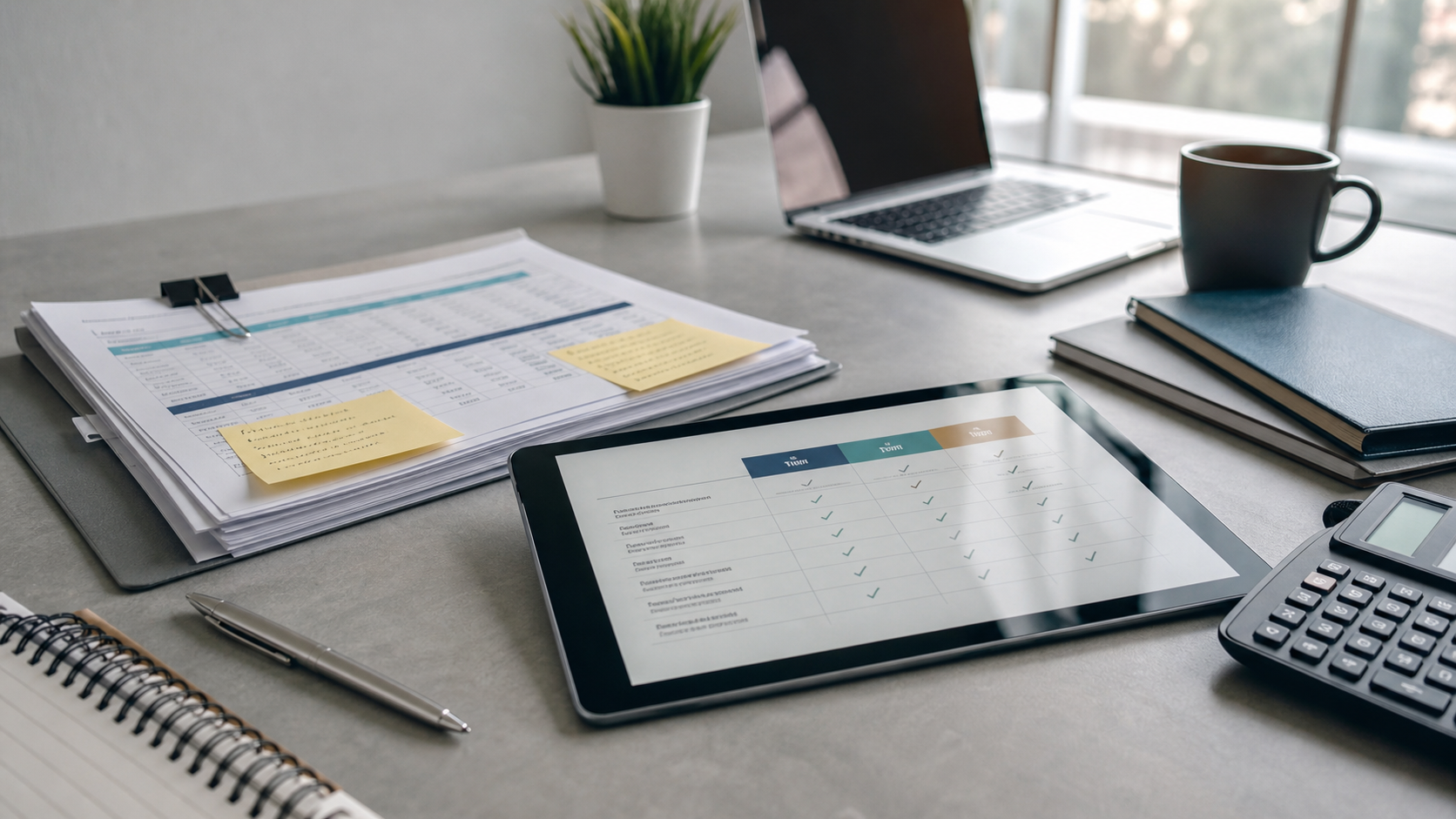
Front-loaded facts: A high-yield savings account is best for cash you may need within the next few months or years, not for long-term investing. The right account is usually the one with a competitive APY, no monthly fee, federal deposit insurance, easy transfers, and rules you can live with. The highest advertised rate is not always the best deal if the account has balance caps, withdrawal delays, teaser terms, or customer service problems.
If you are asking how to choose a high-yield savings account, start with a simple test: will this account keep your emergency fund safe, easy to reach, and earning a reasonable rate after fees? That question matters more than chasing every small rate change. Online banks, credit unions, fintech platforms, and traditional banks can all advertise attractive savings yields, but their account rules can work very differently.
This guide explains the comparison criteria that careful consumer finance editors use: APY, fees, deposit insurance, minimums, transfer speed, customer support, account access, tax treatment, and fit by goal. It also includes examples and decision rules so you can choose without guessing.
Educational note: This article is general information, not personalized financial, tax, or legal advice. Rates, fees, insurance rules, and account terms can change. Verify current terms directly with the bank, credit union, or provider before opening an account.
What is a high-yield savings account?
A high-yield savings account is a deposit account that typically pays a higher annual percentage yield than a standard savings account. It is designed for cash savings, such as an emergency fund, a down payment reserve, a tax bill set-aside, or money for a planned purchase.
Definition: Annual percentage yield, or APY, is the yearly rate of return on a deposit account after compounding is included. APY is the number to compare across savings accounts because it gives a more complete picture than a simple interest rate.
High-yield savings accounts are often offered by online banks because those institutions may have lower branch costs. Credit unions and traditional banks also offer competitive accounts at times. Some financial technology companies market savings-like products through partner banks, which makes it especially important to confirm how your deposits are held and insured.
“A good high-yield savings account should make your cash work harder without making it harder to reach in an emergency.”
Start with safety: FDIC or NCUA insurance

Before comparing rates, confirm whether the account is federally insured. Most bank deposit accounts are insured by the Federal Deposit Insurance Corporation, commonly called the FDIC, within applicable limits. Most credit union deposit accounts are insured by the National Credit Union Administration, or NCUA, within applicable limits.
Federal deposit insurance does not mean the rate is guaranteed forever. It means eligible deposits are protected up to applicable limits if the insured institution fails. If an account is offered through a fintech app, look for the name of the partner bank, the deposit program terms, and how pass-through insurance is described. If the details are vague, treat that as a reason to slow down.
Safety checklist
- Confirm the legal name of the bank or credit union.
- Check that the institution is FDIC-insured or NCUA-insured, as applicable.
- Review whether your total deposits at that institution could exceed insurance limits.
- Read how deposits are held if the account is offered through an app or brokerage platform.
- Do not rely only on a logo in an advertisement. Verify in the account disclosures.
Compare APY, but do not chase APY alone
APY is important because a higher yield can help your cash keep up better with inflation. Still, savings rates move. Banks can raise or lower variable APYs at any time, often in response to broad interest-rate conditions and competition for deposits.
For example, suppose you keep $10,000 in savings. At a 4.00% APY, a rough one-year interest estimate is about $400 before taxes, assuming the rate holds. At a 4.25% APY, the estimate is about $425. The difference is about $25 before taxes. That extra money is nice, but it may not justify switching if the higher-rate account has slow transfers, poor service, or limits that do not fit your needs.
“The best APY is only best if you can actually use the account without fees, delays, or fine-print traps.”
Watch for rate fine print
Some accounts advertise a strong yield but attach conditions. You may need a minimum balance, a direct deposit, a linked checking account, a certain number of debit transactions, or a maximum balance cap. Other rates may be promotional and apply only for a limited period.
A practical rule: if two accounts differ by less than 0.25 percentage points, choose the one with simpler rules unless you have a large balance. Simplicity has real value when the money is your emergency fund.
High-yield savings account comparison table
| Factor | What to compare | Why it matters |
|---|---|---|
| APY | Current variable yield, compounding, promotional terms | Determines how much interest your cash may earn before taxes |
| Fees | Monthly fee, excess transaction fee, wire fee, paper statement fee | Fees can erase the benefit of a higher rate |
| Minimums | Opening deposit, minimum balance for APY, minimum to avoid fees | Low minimums make the account easier to keep long term |
| Access | ACH transfers, ATM card, checks, same-bank transfers | Emergency money should not be trapped when you need it |
| Insurance | FDIC or NCUA status and ownership limits | Protects eligible deposits within applicable limits |
| Support | Phone hours, chat, secure messaging, complaint history | Service quality matters when a transfer or login issue happens |
Fees can change the answer
A high-yield savings account should usually have no monthly maintenance fee. If an account charges a monthly fee, compare the waiver requirements with your normal behavior. Do not assume you will remember to meet a condition every month.
Also check transfer fees. ACH transfers are often free, but outgoing wires, official checks, expedited transfers, paper statements, or excessive transactions may cost money. Some banks no longer enforce old savings withdrawal limits, while others still apply transaction restrictions through account terms. Read the current disclosure rather than relying on an old rule of thumb.
Example: fee vs rate
Imagine Account A pays 4.20% APY with no monthly fee. Account B pays 4.35% APY but charges $5 monthly unless you keep at least $5,000 in the account. If your average balance is $2,000, the higher APY on Account B might produce only a few extra dollars of annual interest, while the fee could cost $60 per year. For that saver, Account A is likely the cleaner choice.
Choose based on the job of the money
The best account depends on why you are saving. Cash for next month’s rent, a car repair fund, and a future home down payment do not need the same setup.
Emergency fund
For emergency savings, prioritize safety, reliability, and fast access. A slightly lower APY may be acceptable if the account has strong customer support and easy transfers to your checking account.
Short-term goal fund
For a vacation, appliance replacement, wedding expense, or annual insurance premium, look for savings buckets or subaccounts. These features can help you separate goals without opening many accounts.
Large cash reserve
For larger balances, insurance limits and account titling matter more. You may need to spread funds across institutions or ownership categories to stay within insured limits. Verify the rules before moving large sums.
When a high-yield savings account is not the right tool
A high-yield savings account is not the best fit for every dollar. Money you need for daily spending may belong in checking. Money you can leave untouched for a fixed period may fit a certificate of deposit if the term and early withdrawal rules work for you. Money for long-term goals, such as retirement many years away, may need an investment account, with the understanding that investments can lose value.
Do not use a high-yield savings account to take investment risk. The point is cash stability. The trade-off is that savings yields can fall, and after taxes and inflation, your purchasing power may not grow much.
“Savings accounts are for certainty and access. Investments are for long-term growth potential with risk. Mixing those jobs can lead to poor decisions.”
How taxes work on savings interest
Interest from a high-yield savings account is generally taxable. Banks may issue a Form 1099-INT if your interest meets reporting thresholds, but you may still need to report taxable interest even if you do not receive a form. State tax treatment can vary.
For a realistic comparison, think in after-tax terms. If you earn $400 of interest and your combined tax rate is 25%, your after-tax interest would be about $300. This does not make the account bad. It simply means advertised APY is not the same as money you keep after taxes.
Step-by-step: how to choose a high-yield savings account
- Define the purpose. Emergency fund, short-term goal, tax reserve, or general cash savings.
- Set your access requirement. Decide whether next-day ACH is enough or whether you need ATM access.
- Verify insurance. Confirm FDIC or NCUA coverage and review limits for your ownership type.
- Compare APY using current disclosures. Check whether the rate is variable, tiered, capped, or promotional.
- Subtract likely fees. Monthly fees, transfer fees, and statement fees can change the winner.
- Review minimums. Avoid accounts that require balances you may not consistently maintain.
- Test usability. Read recent app reviews, support hours, login security, and transfer policies.
- Open with a small transfer first. Confirm funding, linking, and withdrawal processes before moving your full balance.
Practical decision rules
- Pick no monthly fee over a slightly higher APY with complicated waiver rules.
- For emergency funds, do not choose an account that makes withdrawals confusing or slow.
- For balances under $5,000, service and simplicity often matter more than a tiny rate difference.
- For balances above insurance limits, compare institutions and ownership categories before chasing yield.
- Avoid any provider that does not clearly explain where deposits are held and how insurance applies.
Common mistakes to avoid
The first mistake is choosing by headline APY only. The second is ignoring account access until an emergency happens. The third is keeping too much money in one place without checking insurance limits. The fourth is assuming every app that mentions partner banks works exactly like a direct bank account.
Another mistake is changing accounts too often. If you move your savings every time another bank offers a rate that is 0.10 percentage points higher, you may create extra tax forms, transfer delays, and administrative work for very little gain. Rate shopping is useful, but only when the difference is large enough to matter for your balance.
Questions and answers
Is a high-yield savings account safe?
It can be safe when it is an eligible deposit account at an FDIC-insured bank or NCUA-insured credit union and your deposits are within applicable limits. Safety also depends on account security, transfer practices, and whether you understand the provider’s terms.
How often do high-yield savings rates change?
Most high-yield savings account APYs are variable, so they can change at any time. Banks often adjust rates when market interest rates, funding needs, or competitive conditions change.
Should I choose the account with the highest APY?
Not automatically. The highest APY may be a good choice if the account also has no monthly fee, clear insurance, reasonable access, and rules that fit your situation. If the difference is small, a simpler account may be better.
Can I lose money in a high-yield savings account?
You should not lose principal in an insured deposit account within applicable limits because of market changes, unlike investments. However, fees, taxes, fraud, inflation, or deposits above insurance limits can affect your real outcome.
How much should I keep in high-yield savings?
Many households use high-yield savings for an emergency fund and short-term goals. A common emergency fund target is several months of essential expenses, but the right amount depends on income stability, dependents, debt, insurance coverage, and comfort with risk.
Bottom line
Knowing how to choose a high-yield savings account comes down to matching the account to the job of your cash. Start with federal deposit insurance, then compare APY, fees, minimums, transfer access, and service quality. A strong account should be boring in the best way: safe, clear, low-cost, and easy to use when life gets expensive.
Before you open an account, review the provider’s current disclosures. Rates, fees, minimums, transfer limits, and promotional terms can change, and the best choice is the one that fits your actual balance and access needs today.
Leave a Reply